Description
Syvecs S8 Engine Control Unit
Professional Engine Management | Motorsport Performance | Advanced Engine Control
The Syvecs S8 is a high-performance Engine Control Unit designed to deliver exceptional precision, flexibility and reliability in demanding motorsport and performance vehicle applications.
Developed using the proven Syvecs engine management architecture, the S8 combines powerful processing capabilities with extensive input/output functionality, advanced engine control strategies and comprehensive calibration options.
Syvecs engine management technology is trusted by professional racing teams, OEM vehicle manufacturers, specialist engineering companies and aftermarket tuning workshops around the world.
At the heart of the S8 is a twin-processor architecture combining a high-speed RISC processor for real-time code execution with a dedicated FPGA for accurate engine position tracking and scheduling of critical engine control events.
This architecture allows engine control scheduling to operate independently of incoming engine position signal patterns, improving processing efficiency, flexibility and timing accuracy during demanding transient conditions.
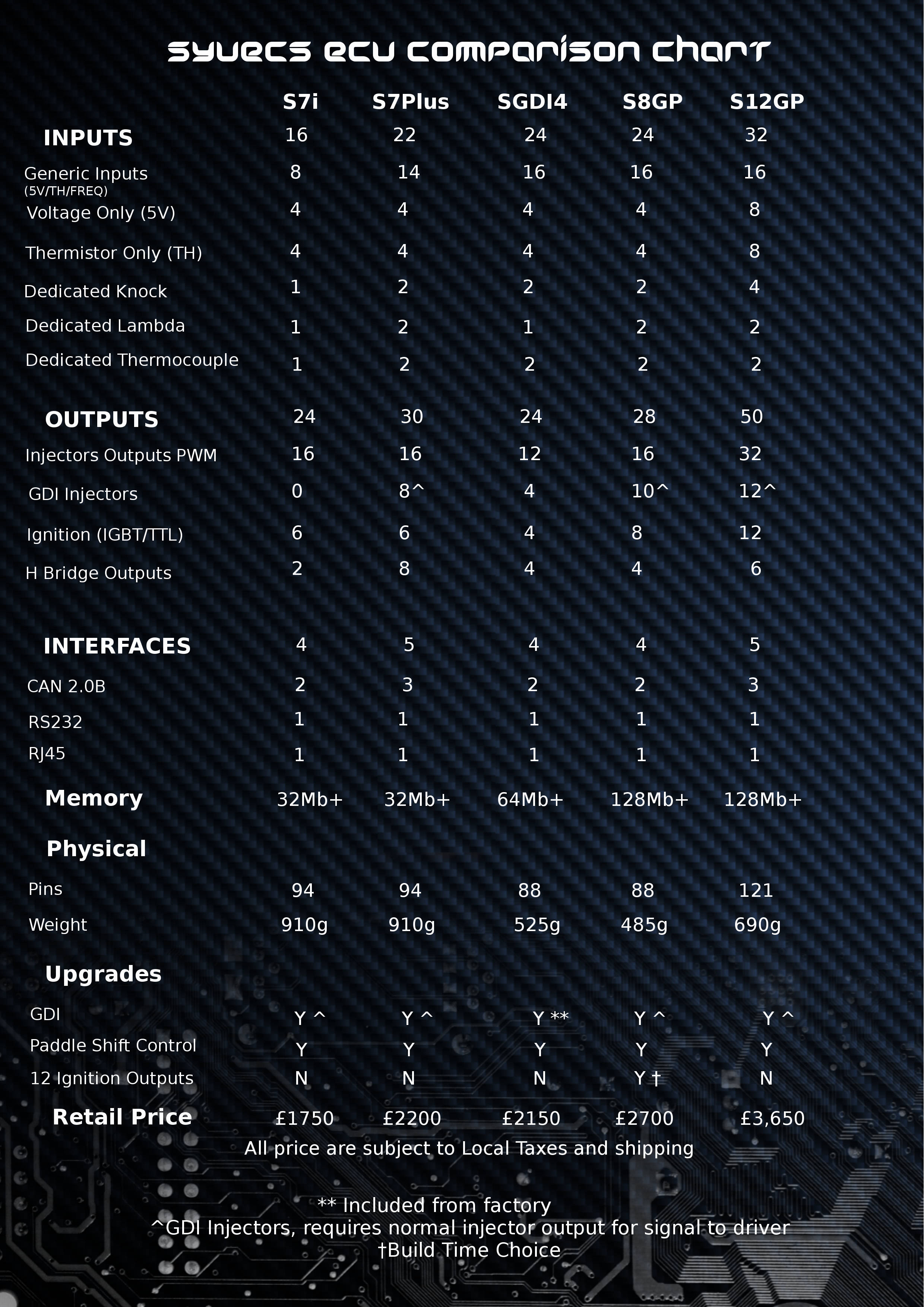
With 24 general-purpose analogue inputs, 28 high/low-side driver outputs, eight ignition drivers and dual CAN Bus communication, the S8 provides extensive flexibility for sophisticated engine management installations.
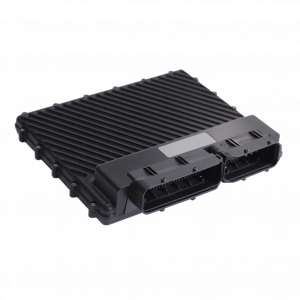
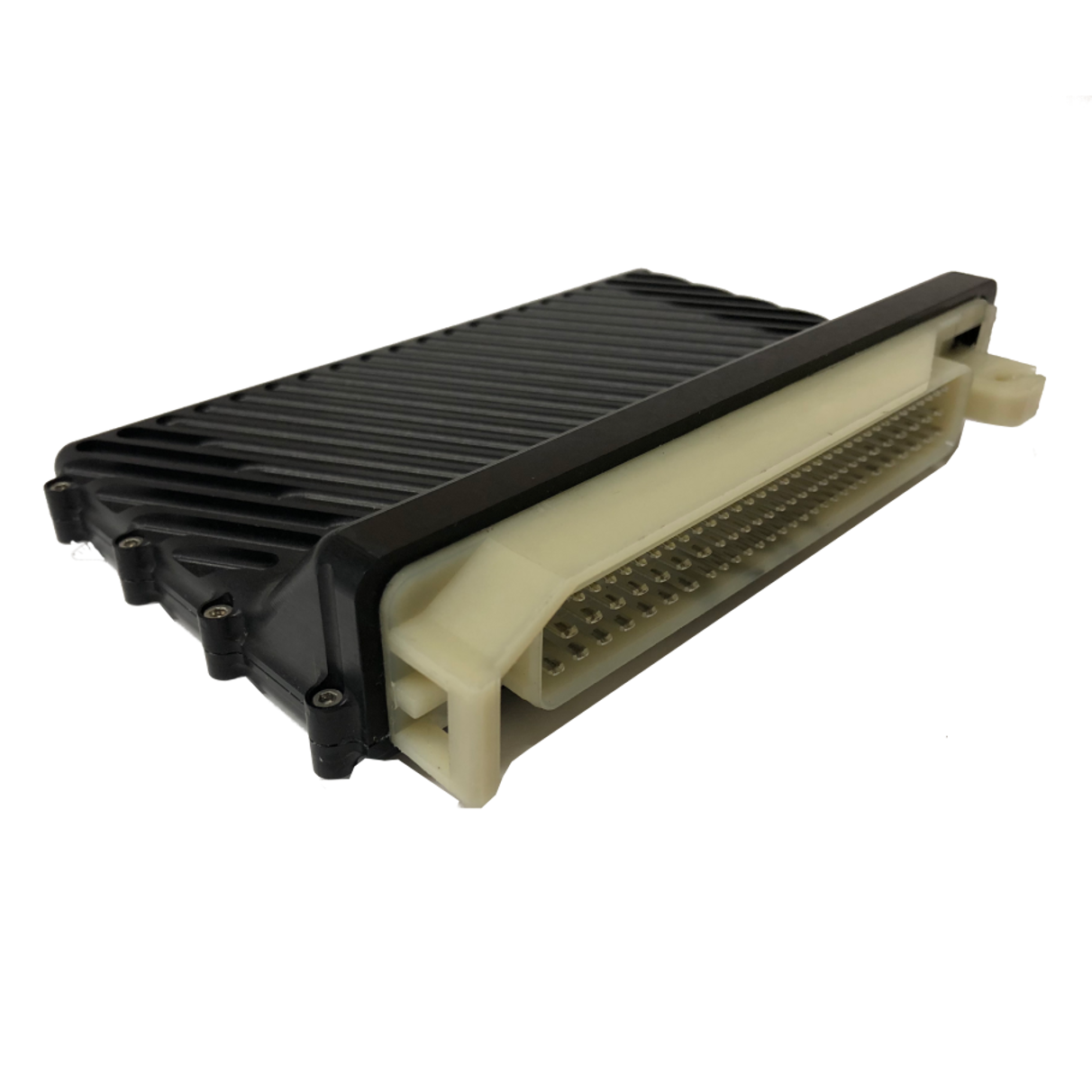
The S8 is housed in a compact sealed billet aluminium enclosure with a single 88-pin waterproof connector, providing a practical solution for professional motorsport and custom vehicle installations.
Combined with high-speed Ethernet communication and onboard data logging of up to 64MB, the S8 provides a powerful platform for professional engine calibration, monitoring and performance development.
Advanced Engine Management
The S8 provides precise control over fuel delivery, ignition timing and engine operation, supported by a powerful processing architecture designed for demanding motorsport applications.
Its dedicated FPGA handles high-speed engine position tracking and scheduling, allowing accurate control of critical engine events across a wide range of operating conditions.
With extensive configurable inputs and outputs, the S8 can accommodate a wide range of sensors, actuators and engine configurations, making it suitable for specialist performance and competition applications.
Dual CAN Bus interfaces allow communication with compatible motorsport electronics and external control devices, while Ethernet connectivity supports ECU programming and data transfer.
S8 Hardware Specifications
Analogue Inputs
24 x General Purpose Analogue Inputs
- 16 x 5V/Bipolar Inputs - Sensor, Sync and Speed Signals with Programmable Trigger Voltages
- 4 x 5V Sensor Inputs
- 4 x Thermistor Sensor Inputs
Additional Inputs
- 2 x NTK Wideband Lambda Inputs
- 2 x K-Type Thermocouple Circuits
- 2 x Knock Inputs
Output Drivers
28 x High/Low Side Driver Outputs
- 4 x Half Bridge Outputs (Maximum 10A)
- 16 x Low Side Injection/PWM Outputs (Maximum 10A)
- 8 x TTL / IGBT Ignition Drivers
Communications
- 2 x CAN 2.0B Interfaces
- 1 x RS232 Communications Port
- 100 Mbps Full-Duplex Ethernet for ECU Programming and Data Download
Onboard Data Logging
The S8 offers onboard data logging and PC-based logging capabilities, allowing engine and vehicle parameters to be recorded for detailed analysis and calibration development.
| Specification | Capability |
|---|---|
| Internal Logging Memory | Up to 64MB |
| PC-Based Logging | Supported |
| Data Transfer | Ethernet |
Recorded data provides valuable insight into engine performance, helping engineers and tuners evaluate calibration changes, investigate operating conditions and diagnose potential issues.
Electrical & Mechanical Specifications
| Construction | Sealed Billet Aluminium Enclosure |
| Connector System | 1 x Waterproof Connector |
| Total Pins | 88 |
| Supply Voltage | 6V to 20V DC |
| Input Protection | Reverse Polarity Protection |
| Sensor Supplies | 2 x Protected Regulated 5V Outputs |
| Operating Temperature | -25°C to +95°C |
| Dimensions | 178 x 122 x 36mm |
S8 Features & Capabilities
The S8 provides a comprehensive hardware platform for advanced engine management, motorsport control and data acquisition.
Engine Management
- High-Precision Fuel Control
- High-Precision Ignition Control
- Configurable Engine Position Tracking
- Advanced Engine Control Algorithms
- Configurable Analogue Sensor Inputs
- Wideband Lambda Measurement
- Exhaust Gas Temperature Measurement
- Knock Sensor Monitoring
Inputs & Outputs
- 24 General Purpose Analogue Inputs
- 16 Low-Side Injection/PWM Outputs
- 4 Half Bridge Outputs
- 8 TTL / IGBT Ignition Drivers
- 2 Wideband Lambda Inputs
- 2 K-Type Thermocouple Inputs
- 2 Knock Inputs
Communications & Integration
- Dual CAN 2.0B Communication Interfaces
- RS232 Communications
- 100 Mbps Full-Duplex Ethernet
- Integration with Compatible External CAN Devices
- PC Connection for ECU Programming and Data Transfer
Calibration & Data Acquisition
- Advanced Engine Calibration Capabilities
- Flexible Engine Control Configuration
- Internal Data Logging of up to 64MB
- PC-Based Data Logging
- Ethernet Data Download
- Detailed Engine and Vehicle Parameter Monitoring
Trusted by Motorsport Professionals Worldwide
Syvecs engine management systems are used by professional racing teams, OEM vehicle manufacturers, specialist engineering companies and aftermarket tuning workshops around the world.
From international motorsport and endurance racing to specialist vehicle development and record-breaking performance applications, Syvecs technology has established a reputation for precision, flexibility and reliability.
The S8 benefits from the same engineering experience and commitment to advanced engine management technology found throughout the Syvecs product range.
Explore the vehicles, racing teams and engineering projects that have used Syvecs technology in demanding motorsport and development applications.
Explore the Syvecs Hall of Fame
Available functionality depends on ECU configuration, firmware and application requirements. Certain advanced control strategies and integrations may require additional hardware or application-specific development.