Description
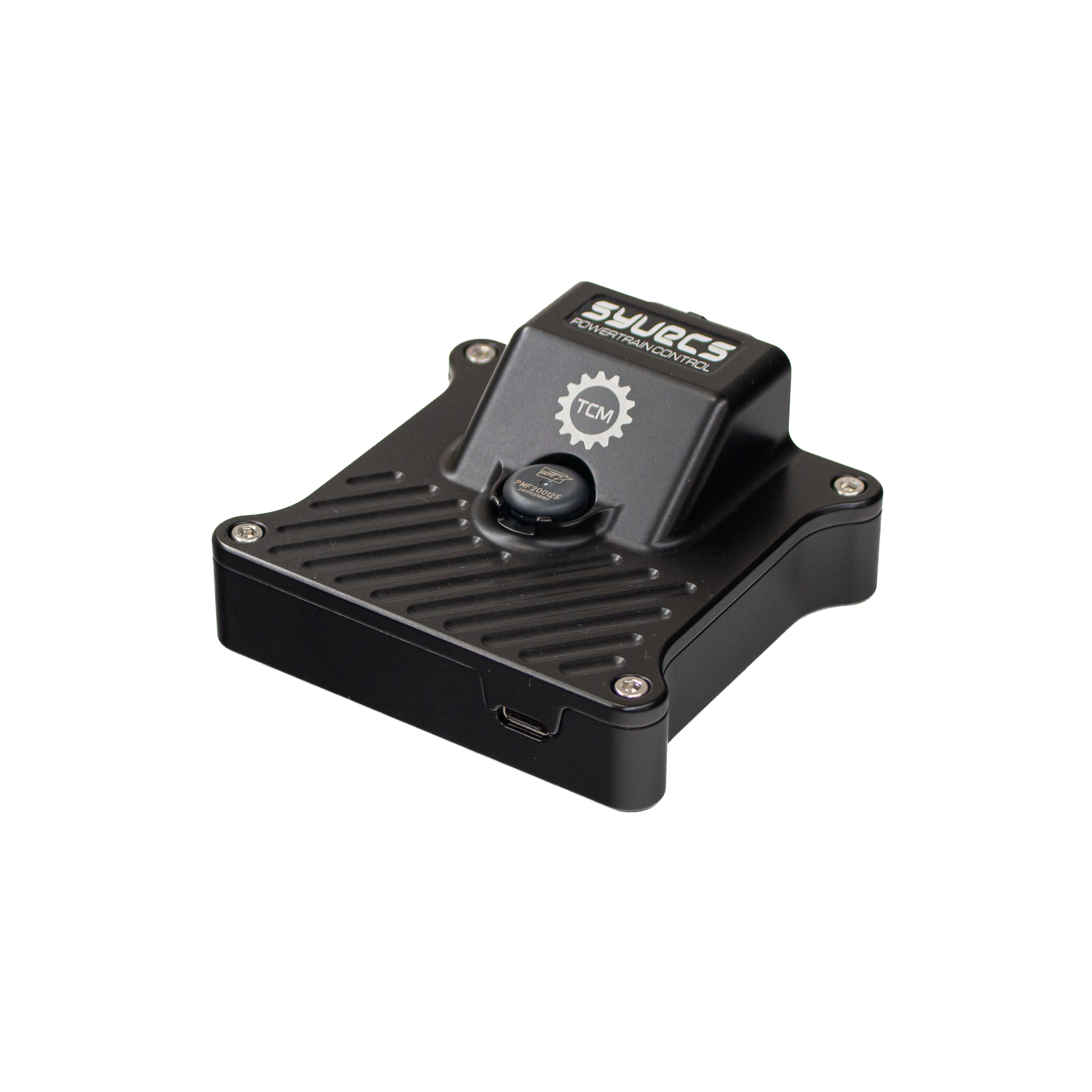
Syvecs SyvTCM – DQ500 DSG Control
Standalone Control for Selected VAG DQ500 Transmissions
The Syvecs SyvTCM provides complete standalone integration of selected Volkswagen Audi Group DQ500 seven-speed dual-clutch transmissions.
Designed for high-torque engine conversions, motorsport vehicles, restomods and custom installations, the SyvTCM allows the fast-shifting, wet-clutch DQ500 transmission to operate outside its original vehicle platform.
The system communicates directly with the original gearbox controller while reproducing the engine and vehicle information normally provided by the factory ABS, engine ECU, steering-column module and other OEM systems.
The SyvTCM can operate alongside a Syvecs ECU, aftermarket ECU, OEM engine management system or an older engine installation with minimal electronics.
Supported DQ500 Transmissions
The current SyvTCM DQ500 control package supports selected transmissions fitted with the earlier CAN 2.0B-based internal gearbox controller.
Compatibility must always be confirmed using the complete gearbox and TCM part numbers, as the production year, donor vehicle or gearbox casing alone cannot confirm support.
Example supported DQ500 gearbox applications and part numbers include:
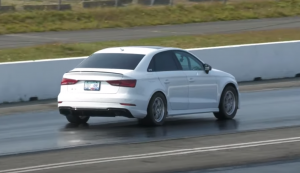
- Audi RS3 / TTRS MQB – 0DL 300 013 E
- Volkswagen Tiguan / SEAT Tarraco MQB – 0DL 300 013 AX
- Volkswagen Tiguan MQB Petrol – 0DL 300 013 H
- Volkswagen Arteon MQB – 0DL 300 011 QX
- Volkswagen Transporter T6 – 0BT 300 012 B
- Volkswagen Transporter T6 Rebuilt Unit – 0BT 300 012 C
From 2023, Audi 8Y DQ500 applications changed to a newer internal gearbox controller using CAN FD communication. These CAN FD versions are not currently supported by the SyvTCM.
Important: Not every DQ500 transmission is supported. The SyvTCM control package is designed for selected DQ500 transmissions fitted with the earlier CAN 2.0B-based controller. Audi 8Y DQ500 controllers using CAN FD, generally fitted from 2023 onwards, are not currently supported. Always confirm compatibility using the complete gearbox and TCM part numbers before purchasing a transmission.
A Complete Standalone DSG Solution
In the original vehicle, the DQ500 relies on information from multiple control modules before it can operate correctly.
The SyvTCM replaces these missing vehicle communications and provides the engine, driver and vehicle information required by the original DSG controller.
This makes it possible to retain the DQ500’s original mechatronic, hydraulic and clutch-control systems without requiring the complete electronics package from the donor vehicle.
The SyvTCM manages and coordinates:
- Park, Reverse, Neutral and Drive selection
- Automatic and Manual operation
- Paddle shifting
- Normal and Dynamic gearbox modes
- Engine torque reporting
- Torque-reduction requests
- Downshift protection
- Automatic upshift control
- Launch-control integration
- Reverse-light control
- Gearbox diagnostics
- Clutch adaptation functions
- Transmission fault and limp strategies
Works with Almost Any Engine Management System
When used with a Syvecs ECU, the required engine and vehicle data can be exchanged directly over CAN.
For other aftermarket or OEM engine controllers, the SyvTCM can use a supported CAN protocol or its fully configurable Generic CAN Receive and Transmit functions.
Important signals can also be connected through the SyvTCM’s physical inputs, allowing the DQ500 to operate in older or unusual vehicles where little or no CAN data is available.
Engine speed can be obtained from:
- Syvecs ECU CAN
- Supported aftermarket ECU CAN
- Supported OEM CAN
- Generic configurable CAN
- A frequency-based engine-speed signal
- An injector or other suitable pulsed signal
Vehicle speed can be obtained from:
- OEM or aftermarket ABS CAN data
- Physical wheel-speed sensors
- The gearbox output-shaft speed
Where the engine ECU cannot provide calculated torque values, the SyvTCM can generate its own estimated torque using configurable engine-speed, manifold-pressure, throttle-position and pedal-position tables.
OEM Vehicle Emulation
The original DQ500 gearbox controller expects to receive information from several modules within the donor vehicle.
The SyvTCM’s dedicated standalone control software reproduces the required data from systems including:
- Engine ECU
- ABS and wheel-speed system
- Steering-column electronics
- Brake system
- Instrument and selector systems
- Vehicle dynamics sensors
This allows the original DQ500 controller to function correctly in a non-OEM chassis while retaining the flexibility required for custom and motorsport applications.
Multiple Shifter Options
The SyvTCM supports OEM and motorsport-style gear-selection options, allowing the installation to retain a factory appearance or use a simplified competition layout.
VAG Electronic Shifter
The original VAG electronic shifter can be retained, providing familiar factory-style operation.
Depending on the selected configuration, supported functions can include:
- Park, Reverse, Neutral and Drive
- Manual mode
- Sport or Dynamic mode
- Gear-position indication
- Park-lock monitoring
- Paddle-shift operation
CAN Keypads
The SyvTCM can also operate with:
- Grayhill / MoTeC CANopen keypads
- Generic CAN keypads
- Custom CAN switch panels
Keypad buttons can be assigned to functions including:
- Park
- Reverse
- Neutral
- Drive
- Manual/Automatic mode
- Sport or Dynamic mode
- Calibration selection
- Additional motorsport functions
Paddle-Only Control
For motorsport and simplified custom installations, the DQ500 can be operated using two paddles and a brake input without a conventional electronic shifter.
A typical paddle-only configuration provides:
- Right paddle for Drive and upshifts
- Left paddle for Reverse and downshifts
- Both paddles together for Neutral
- Brake input for safe Drive and Reverse selection
- Configurable Manual and Automatic mode switching
Built-in speed and brake interlocks help prevent unsafe Reverse or Park selection.
Automatic and Manual Operation
The original DQ500 controller retains control of the internal clutch and gear-selection operation, while the SyvTCM provides the external information needed to manage gearbox behaviour.
The system supports:
- Automatic Drive mode
- Permanent Manual mode
- Temporary Manual mode from a paddle request
- Configurable return from Manual to Automatic
- Paddle-request filtering
- Downshift over-rev protection
- Gearbox mode selection
- Automatic paddle-up requests
When operating in Automatic mode, the factory DSG controller manages gear selection using the engine, torque, throttle, pedal and vehicle-speed information supplied by the SyvTCM.
In Manual mode, shifts can be requested using the OEM shifter, paddles, keypad or configurable CAN messages.
Normal and Dynamic Gearbox Modes
Supported DQ500 controllers can provide Normal and Dynamic gearbox modes.
Normal
Provides smoother and more progressive operation for normal road driving and lower-load use.
Dynamic
Provides more responsive gearbox behaviour for performance driving, with revised shift characteristics from the original DSG controller.
The selected mode can be linked to the SyvTCM calibration switch, a keypad, physical input or configurable CAN signal.
Torque-Based DSG Control
Accurate torque information is particularly important for a high-torque dual-clutch transmission because the gearbox controller uses it to determine clutch pressure, clutch handover and shift behaviour.
The SyvTCM supports:
- Actual engine torque
- Potential engine torque
- Driver-demanded torque
- Gearbox torque-limit requests
- Shift torque-reduction requests
- Configurable torque multipliers
- Internal engine-torque estimation
- Engine torque limiting during gearbox faults
Torque values can be received directly from a compatible engine ECU or calculated internally by the SyvTCM.
During a gear change, the DQ500 controller can request a reduction in engine torque. The SyvTCM passes this request to the engine controller, allowing a compatible ECU to use ignition retard, fuel cut, electronic throttle control or another suitable strategy.
Coordinating the engine and transmission in this way helps produce fast, consistent gear changes while reducing stress on the clutches and driveline.
Automatic Paddle-Up Control
The SyvTCM includes an automatic paddle-up strategy for drag racing, roll racing and other applications where accurate and repeatable shift points are important.
The strategy can operate as:
- A visual shift indicator
- An automatic virtual paddle-up request in Manual mode
Individual RPM targets can be configured for each gear. Activation can also take account of:
- Vehicle speed
- Throttle position
- Current gear
- Engine RPM rate of change
- Configurable hysteresis
- Shift-request timeout
Using RPM rate of change allows the shift request to be adjusted depending on how quickly the engine is accelerating, helping the gearbox complete the shift closer to the intended engine speed.
Safety conditions can prevent unwanted automatic shift requests during low-speed operation, burnouts or launch conditions.
GPS and IMU Integration
The original DQ500 controller can use lateral and longitudinal acceleration data when determining gearbox behaviour.
Standalone operation is possible without this information, but a Syvecs GPS/IMU module is recommended for circuit and high-performance applications.
Depending on the selected module, the SyvTCM can provide the gearbox controller with:
- Longitudinal G-force
- Lateral G-force
- Yaw information
- High-rate vehicle-speed data
Providing this vehicle-dynamics information can improve gearbox behaviour and shift consistency during braking, cornering and high-load circuit use.
Diagnostics and Gearbox Monitoring
The SyvTCM communicates directly with the DQ500 controller and makes important gearbox information available through Syvecs SCal.
Available functions include:
- Read and clear transmission DTCs
- Monitor transmission fault and limp status
- Perform gearbox basic settings and clutch relearn
- View actual and requested gear position
- View input-shaft and output-shaft speeds
- Monitor gearbox oil temperature
- Monitor shift state
- Monitor gearbox torque-limit requests
- Monitor actual, potential and requested engine torque
- Monitor Clutch 1 and Clutch 2 pressure
- Monitor shifter, keypad and paddle inputs
Fault and limp information can be transmitted to the engine ECU, allowing engine torque to be limited if the transmission reports a problem.
Clutch-Pressure Logging
The SyvTCM can request clutch-pressure information directly from supported DQ500 controllers.
Clutch 1 and Clutch 2 pressure can then be viewed and logged within SCal alongside engine, gearbox and vehicle information.
This gives calibrators a detailed view of:
- Clutch application
- Clutch handover during shifts
- Requested engine torque
- Gearbox torque reduction
- Shift timing
- Engine-speed changes
- Gearbox temperature
- Transmission faults
This information is particularly useful when analysing shift quality, clutch behaviour and high-torque gearbox operation.
High-Speed Data Logging
The SyvTCM includes powerful onboard logging to help installers and calibrators analyse DQ500 operation.
Logging can be performed:
- Directly to a connected PC
- To the SyvTCM’s internal logging memory
- To a compatible USB memory stick
Available logging data includes:
- Actual and requested gear
- Input-shaft and output-shaft speeds
- Shift state
- Clutch pressures
- Gearbox oil temperature
- Actual, potential and requested engine torque
- Gearbox torque-limit requests
- Paddle and shifter inputs
- Vehicle speed and wheel speeds
- Lateral and longitudinal G-force
- Transmission fault and limp status
- Engine and vehicle data received over CAN
Recorded data can be opened and analysed using Syvecs SView software.
Key Features
- Standalone integration of selected DQ500 transmissions
- Supports earlier CAN 2.0B-based DQ500 gearbox controllers
- Seven-speed wet-clutch dual-clutch transmission support
- Compatible with Syvecs, aftermarket and OEM engine controllers
- Dedicated emulation of missing OEM vehicle modules
- Suitable for high-torque engine conversions
- Suitable for non-OEM chassis installations
- Internal torque model for ECUs without torque calculations
- OEM VAG electronic shifter support
- Paddle-only control
- Generic and Grayhill CAN keypad support
- Automatic and Manual gearbox operation
- Normal and Dynamic gearbox modes
- Torque-based clutch and shift management
- Engine torque-reduction requests
- Automatic paddle-up control
- Gear-based RPM shift targets
- RPM rate-of-change compensation
- Downshift over-rev protection
- Launch-control integration
- Reverse-light output
- Direct gearbox DTC reading and clearing
- Gearbox basic settings and clutch relearn support
- Clutch-pressure monitoring
- Transmission fault and limp monitoring
- GPS and IMU integration
- High-speed internal and USB data logging
- Live monitoring through Syvecs SCal
- Flexible Generic CAN Receive and Transmit
- Physical inputs for non-CAN engine installations
Bring DQ500 Performance to Almost Any Vehicle
The DQ500 combines rapid seven-speed gear changes, strong wet-clutch construction and substantial torque capability, making it a popular transmission for high-powered road cars, engine conversions and motorsport applications.
The Syvecs SyvTCM removes the transmission’s dependency on the original donor vehicle electronics and provides the communication, torque information and control functions required to operate it in a completely different vehicle platform.
Whether the application is a high-powered road car, drag vehicle, circuit car, restomod or custom conversion, the SyvTCM provides a professional standalone solution for integrating and controlling supported VAG DQ500 transmissions.
Downloads and Support
- Syvecs DQ500 Integration Guide
- Syvecs SCal Software
- Syvecs SView Logging Software
- SyvTCM DQ500 Base Calibration
For transmission compatibility, licence enquiries or assistance selecting the correct gearbox hardware, please contact an authorised Syvecs dealer or email support@syvecs.com.